Before You Buy AV
Before choosing audio and video equipment, describe how you want the room to work.
The right display or speaker is only useful when it supports the room, the people in it, and the way the space will change over time.
In this guide
Start with the room
A room does not have one “best” AV system in isolation. A living room used for a quiet film, a busy kitchen used for news, and a dedicated media room each create different priorities. Begin by naming the moments the system needs to support, then let those moments shape the brief.
Describe who uses the space, how often, and from which seats. Include guests, children, older family members, and anyone who may prefer a simpler control path. A good brief also names what should stay visually quiet when the system is not in use.
Working exercise
The room brief
Write these answers before looking at models or packages.
Treat sightlines and sound as design inputs
A display decision is also a sightline decision. Consider seating distance, viewing angles, daylight, reflections, artwork, millwork, and the height at which people will actually watch. The largest available screen is not automatically the most comfortable or architectural choice.
Audio is shaped by the room around it. Open plans, hard surfaces, rugs, curtains, ceiling height, and adjacent rooms all affect how sound travels. The goal is not to prescribe a universal speaker count; it is to decide where sound should feel present, where it should be restrained, and how much of the equipment should be seen.
Definition / Listening position
The seat or area where the system is expected to sound and feel most balanced. Naming it early helps coordinate speaker locations, display placement, and furniture.
Plan the invisible work
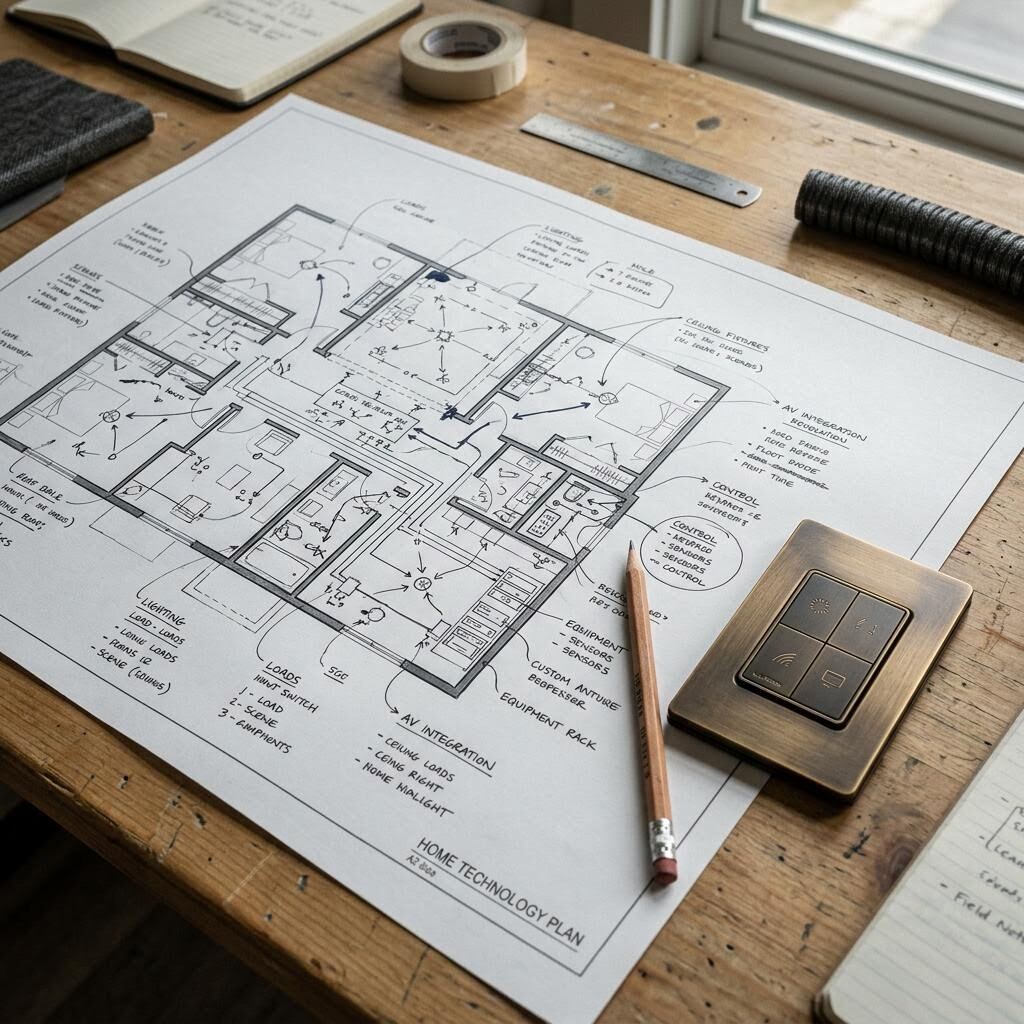
Control expectations belong in the brief too. Decide whether everyday use should be one action, a few labeled choices, or a more detailed interface for people who want it. Include manual controls and physical access where they would make the system easier to understand or recover.
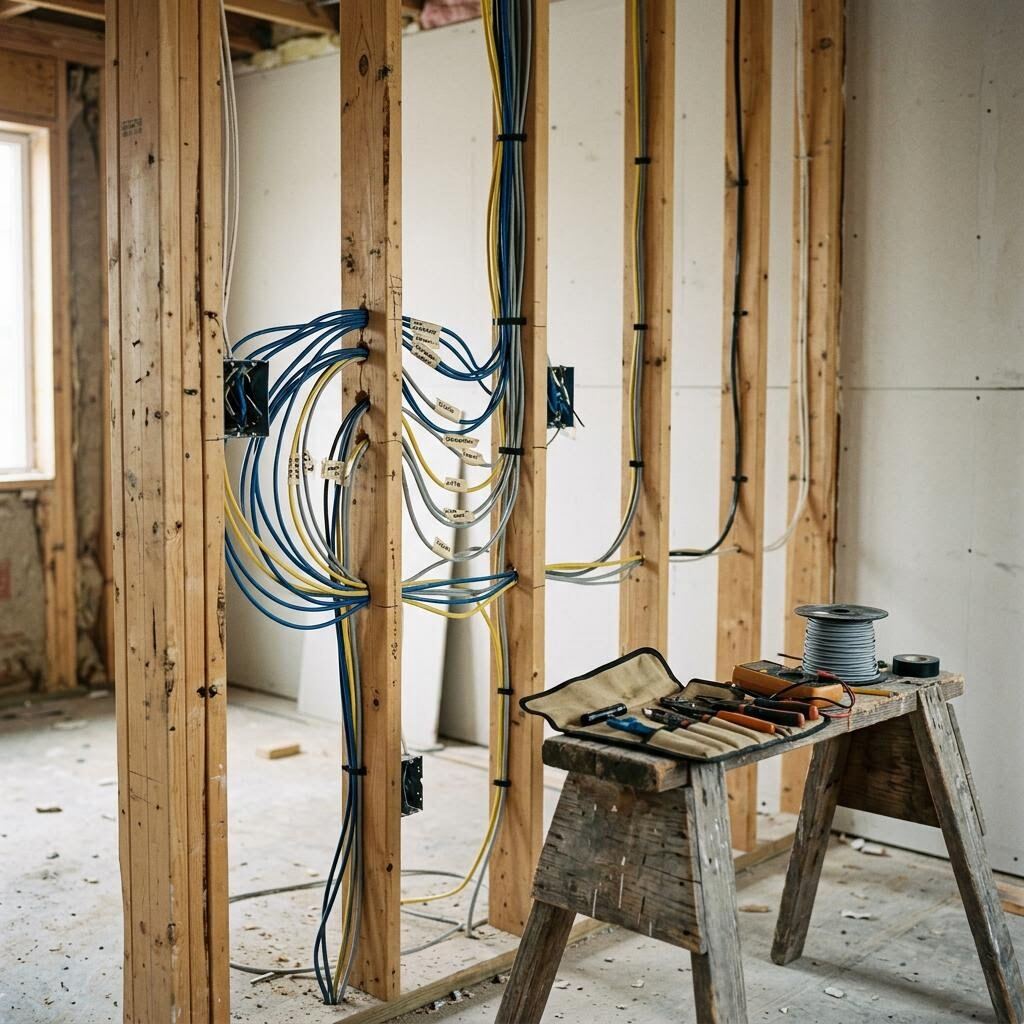
Behind a clean installation are pathways, power, ventilation, data connections, service access, and space for future changes. These decisions are easiest to coordinate before finishes are fixed. They also protect the room from last-minute compromises such as visible cabling or inaccessible equipment.
- Where will sources, amplifiers, network equipment, and power supplies live?
- Which components need ventilation or service access?
- What pathways should be reserved for a future display, projector, speaker, or cable?
- Which controls still work if a network or cloud service is unavailable?
Allocate budget by experience
Comparing a stack of product prices can hide the costs that make a system work: design time, coordination, infrastructure, mounting, configuration, testing, and documentation. A useful budget groups the complete experience rather than treating each box as the project.
Protect the decisions that are difficult to change later—pathways, power, locations, acoustic conditions, and service access. Equipment can be replaced over time. A missed conduit or inaccessible junction is a different kind of cost.
Name the experience
Describe the room's most important uses and the people who need to use it.
Separate fixed from flexible decisions
Identify what must be coordinated with construction and what can be selected later.
Compare complete scopes
Ask what design, installation, configuration, testing, and handoff are included.
Record assumptions
Keep open questions visible so a lower initial price is not mistaken for a like-for-like comparison.
Questions to resolve before shopping
Before comparing equipment, agree on the room brief: sightlines, sound goals, controls, infrastructure, and budget boundaries. Then compare products against those needs instead of marketing language alone.
You do not need to choose every model before construction begins. You do need a coordinated direction, an honest list of dependencies, and a plan for validating the result in the room where it will be used.
A field guide for the next conversation
Use this aid to make the important questions concrete and guide the next project conversation.
Printable decision aid
One-page pre-purchase brief
Complete this page, then take it into an equipment conversation.
Have a project question?
Bring the room uses, sightlines, control expectations, and open decisions into an initial project conversation.